Q&A with Mary Mzubwa Ndaro ’11
Q: Please introduce yourself and share a little about your background. Where were you born? How did you come to choose Wichita State to study for your master’s degree in sociologist?
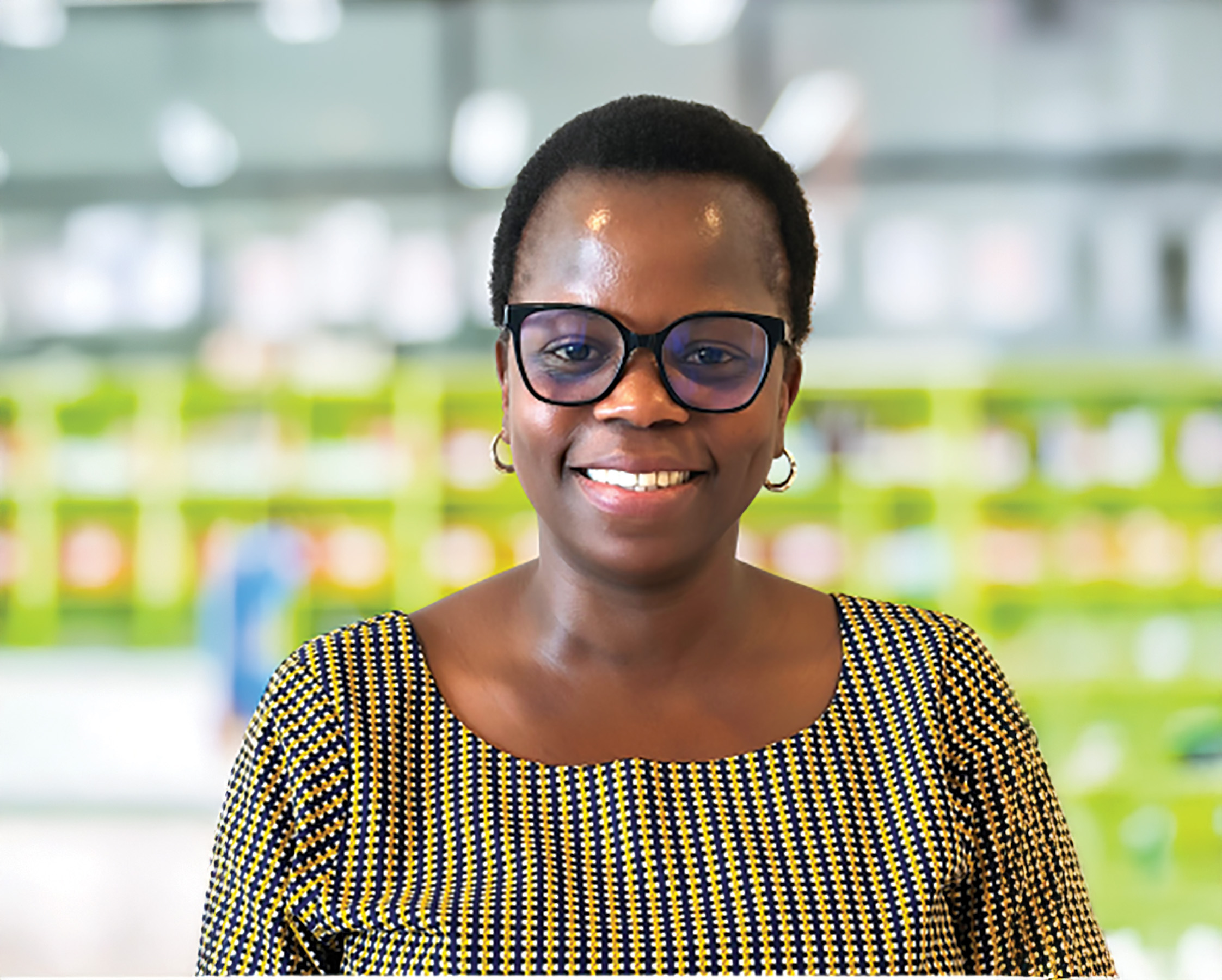
A: My name is Mary Mzubwa Ndaro. I am a sister, a mother, a friend, and, in many ways, a citizen of the world. I am also a proud mother to three beautiful children, Faith, Delgado, and Ibra-Ndaro.
I was born in Musoma District in the Mara Region of Tanzania and raised by my grandmother in Mugango Village, a place that still holds my heart. Mugango is more than where I grew up; it is the foundation of who I am. My early education took me through Mugango Primary School in Nyasho, Musoma Urban, and Nyamalango in Mwanza. I later attended Bwiru Girls’ Secondary School and Korogwe Girls’ High School. I completed my undergraduate studies at the University of Dar es Salaam before moving to the United States to pursue a master’s degree in sociology at Wichita State University in Kansas.
After working for a few years, I felt a strong pull to continue my education. Choosing Wichita State was intentional. It offered a program that aligned with my aspirations, and my sister was already living there. Moving to a new continent came with uncertainty, but knowing I had family nearby gave me courage. I was also drawn to Wichita because it felt calm and manageable, a place where I could grow without feeling overwhelmed.
My time at Wichita State was deeply transformative. While I experienced culture shock, I also found a sense of belonging. One of the most important lessons I gained was self-awareness, the ability to understand who I am and to show up for that person with confidence, even when challenged.
What made Wichita truly special were the people. I built friendships that became family and encountered professors who genuinely cared for their students. Even now, more than ten years later, Jordie Hertzog continues to celebrate my journey. That kind of support leaves a lasting impact.
The sociology department felt like home, especially through the strong sense of feminist sisterhood I experienced. I remember the kindness and support of Dr. Hill and Jennifer Pearson. During my final year, I became pregnant with my second child, and what could have been an overwhelming time became manageable because of the care I received. I still remember Dr. Hill gently reminding me to pause and breathe during a stressful moment, advice that has stayed with me.
Wichita also deepened my feminist identity. While my grandmother laid the foundation of who I am, my education gave me the language, confidence, and clarity to live those values fully. Living abroad also strengthened my appreciation for my roots, my culture, my values, and the beauty of being African.
The cultural diversity at Wichita was meaningful. It created space to celebrate differences while fostering mutual respect. That lesson continues to shape my work and worldview.
I also formed lifelong friendships, including with Rita Subba, who cared for me with warmth and kindness. Among my professors, Professor Ron Matson stands out for his humility and generosity. When I brought my baby to class, he would carry him as though it were the most natural thing in the world. His actions taught me more than any lecture could.
Dr. Charles Koeber also left a lasting impression. His teachings on labour and systems still influence my daily choices. Even now, I think carefully about the impact of convenience on people’s livelihoods.
Looking back, Wichita was more than a university. It was a place that shaped me, giving me education, community, confidence, and lifelong relationships. It strengthened my values and helped me walk more confidently in them. For that, it will always hold a special place in my story.
Q: As a sociologist, what has been the prime focus of your work, and why did you decide to join HakiElimu as the organization’s executive director earlier this year?
A: Over the past 18 years, my work has focused on advancing gender equality, social justice, and inclusive development through a strong feminist and intersectional lens. I have worked across civil society, international organisations, and grassroots movements in Tanzania and beyond, supporting women’s and girls’ rights and challenging unequal systems and structures.
My work brings together policy advocacy, programme leadership, and movement building. I am particularly passionate about creating spaces where women, especially those in marginalised and informal sectors can share their lived experiences and challenge dominant narratives about gender and power. I believe advocacy must go beyond policy change; it must also shift mindsets, amplify voices, and build collective agency.
I joined HakiElimu because its mission, the right to education addresses the root of many of the challenges I have worked on throughout my career. Education is not only a fundamental right; it is a powerful driver of gender equality. Many barriers facing women and girls, such as early pregnancy, child marriage, economic exclusion, and gender-based violence, are closely linked to unequal access to education.
In my previous work, I have supported adolescent mothers returning to school and highlighted structural barriers that prevent girls from completing their education. At HakiElimu, I have the opportunity to deepen this work by positioning education as a tool for social justice and empowerment.
The connection between HakiElimu’s mission and my advocacy is both practical and strategic. Promoting education strengthens girls’ agency, expands their opportunities, and shifts power dynamics within communities. At the same time, applying a feminist and intersectional lens ensures that education systems respond to the realities of marginalised groups, including children with disabilities, young mothers, and those in rural or low-income settings.
I see my role as bridging these spaces, bringing movement-building, storytelling, and advocacy into the education sector while ensuring that education remains grounded in lived realities. In this way, HakiElimu’s mission both aligns with and strengthens my work, contributing to deeper and more meaningful social transformation.
Q: What makes your home country of Tanzania special to you?
A: Tanzania is a beautiful country, complex, resilient, and deeply human. Many people know it for its natural wonders: Mount Kilimanjaro, the Serengeti, Zanzibar’s beaches, and the great lakes. While these are extraordinary, Tanzania is much more than a destination.
It is a country built on strong values of community, respect, and coexistence. With over 120 ethnicities, Tanzania has maintained a remarkable sense of unity, largely grounded in a shared language, Kiswahili, and a culture that values togetherness. People of different faiths have long lived side by side in mutual respect.
One of Tanzania’s greatest strengths is its people. There is a deep sense of connection that people show up for one another. Whether in rural villages or urban spaces, community remains central to daily life. This virtual is, however, visibly eroding with the deepening of neo-liberalism and corporate-led globalisation and growing urbanisation.
Its strength notwithstanding, Tanzania faces challenges common across much of sub-Saharan Africa, including unequal access to healthcare, education, and economic opportunities. Women continue to carry a disproportionate burden of care work and remain underrepresented in decision-making spaces, despite their significant contributions, particularly in agriculture.
The October 29, 2025, general election was a defining moment in Tanzania’s recent history. Held within the country’s regular electoral cycle, it nevertheless unfolded amid a tense, contested political environment that tested democratic values, civic space, and public trust in electoral processes. The violence and unrest that followed left a deep mark on the nation, challenging Tanzania’s self-image as a peaceful country and reminding us of the fragility of both liberal democracy and social fabric.
At the same time, this period brought into clear view the resilience and resolve of Tanzanians, particularly young people, who have continued to demand justice, accountability, and meaningful change. What gives reason for pride and hope is this enduring resilience: the ability of people to adapt, to care for one another, and to continue imagining a better future. Tanzania is still shaping that future, and it holds enormous promise.
For me, Tanzania is not just where I come from. It is the place that shaped my values, resilience, humility, and a deep belief in community. It is a country still writing its story, and I am proud to be part of that journey.